ACCENT CLARITY COACHING
Your accent isn't the problem.
But your audience may still be working too hard.
For multilingual scientists, engineers, researchers, physicians, and technical leaders in high-stakes settings.
Sometimes called accent modification, accent reduction, or pronunciation coaching, this work strengthens intelligibility while preserving your authentic voice.
The goal is not to erase your accent.
The goal is to make it easier for listeners to follow you, so your expertise is what stays with them.
Discuss Accent Clarity CoachingSee If This Sounds Familiar
Pronunciation and Articulation
Specific consonants, vowels, or sound combinations can make familiar words harder for listeners to recognize, particularly when words run together in natural conversation.
Word Stress and Sentence Rhythm
English carries meaning through stress and rhythm in ways that may differ from other languages. When emphasis does not fall where listeners expect it, important distinctions can become harder to follow.
Pacing and Pausing
When speech accelerates or pauses disappear, listeners have less time to process complex ideas. This often becomes more noticeable when responding spontaneously or speaking under pressure.
High-Stakes Technical Language
Names, technical terms, and specialized phrases often carry the central meaning of a presentation or briefing. If a key word is not immediately recognized, the idea can land with extra delay, or not at all.
Idiomatic and Cultural Language
American business conversation is filled with shorthand, idioms, and cultural references that native speakers use without thinking and rarely explain. These less visible language patterns can affect how easily you follow and participate in the conversation around the formal agenda.
Vocal Presence
Breath, resonance, volume, and vocal energy influence both clarity and authority. When the voice does not fully carry the message, listeners may miss the confidence and expertise behind it.
Not Sure What's Making your Speech Harder to Follow?
Get a Free Speech Clarity AssessmentCASE STUDY
It's Not Always the Technical Words
He knew something was off before anyone said a word. He could see it in the room. Colleagues working harder than they should to follow him. Expressions that said I'm tracking you, but it's taking effort. The ideas were clear, but the words were not landing.
He was the CFO of a Japanese manufacturing company based in the U.S. His workforce was predominantly American. And the gap between what he knew and what they heard was costing him — in influence, in efficiency, in the quiet accumulation of meetings that should have been easier.
We started where we always start: with the specific patterns creating the most friction. Consonant clusters. Vowel sounds. Word stress. Pacing. The phonetic layer that determines whether a listener can follow you in real time or is perpetually catching up.
But the problem was not only phonetic. It was also cultural. He understood the numbers fluently. But when a colleague asked for a "back-of-the-envelope" estimate, he had to interpret more than the idiom. He had to reconstruct the cultural expectation behind it — not full precision, not a final answer, but a fast working approximation that could keep the conversation moving.
That kind of translation was happening constantly, invisibly, alongside everything else he was managing. We worked on both the speech patterns creating listener effort and the cultural shorthand shaping the conversation.
The professional results were real. Meetings moved faster. His colleagues followed him more easily. The unnamed friction that had been accumulating in high-stakes conversations began to clear.
But the moment that stayed with me came near the end. He told me he was tired of ordering his favorite beer and being misunderstood. So "Fat Tire" became part of the practice plan.
Being understood in the boardroom mattered. Of course it did. But being understood at the end of a long day, in an ordinary human moment? That gave him his life back.

Accent clarity is not only about leadership presence. It is about moving through your professional and personal world with less friction, more ease,
and more of yourself available for what actually matters.

A Diagnostic Approach to Accent Clarity
We begin by listening to how you speak in the situations that matter to you - at work, in the community, and at home.
We identify the patterns adding the most listener effort, determine which changes will make the greatest difference, and help you apply them in your actual presentations, meetings, leadership, and everyday conversations.
1. Identify What Is Getting in the Way
We listen for the specific patterns affecting how easily others understand you. We also look at when those patterns become more noticeable, such as during connected speech, spontaneous conversation, or high-pressure moments.
2. Focus on What Will Make the Most Difference
You do not need to change every feature of your speech. We target the few pronunciation, rhythm, pacing, or voice patterns that will produce the greatest improvement in clarity while preserving the identity carried in your voice.
3. Apply It Under Real Conditions
We apply the work to the words, conversations, and communication demands that matter in your professional life, so greater clarity carries into technical explanations, unexpected questions, informal exchanges, and high-stakes rooms.

What Greater Clarity Makes Possible
The goal is not to erase your accent or pursue perfect pronunciation. It is speech that listeners can follow easily when your ideas are complex and the moment matters.
With greater clarity:
- Listeners can follow your thinking without unnecessary effort
- Technical terms, names, and key words are more readily recognized
- Your speech remains clearer during spontaneous conversation or under pressure
- You spend less energy monitoring your pronunciation and more energy engaging with the room
- You can more easily recognize and use the idioms, shorthand, and cultural language that shape professional conversation
- Your expertise, rather than the effort required to understand you, becomes the focus
Accent Clarity Coaching for Organizations
Accent clarity coaching can be offered in group or cohort formats for multilingual professionals.
Each participant receives guidance tailored to their own speech, applied to presentations, meetings, client conversations, or leadership communication.
Discuss Coaching for your OrganizationLet’s Identify What Will Make the Greatest Difference
If you are considering accent clarity coaching for yourself or your organization, the next step is a conversation. We’ll talk about where communication friction is showing up, what you want to change, and whether this approach is the right fit.
Schedule a ConversationLed by Lisa Scott, CCC-SLP
Nationally certified speech-language pathologist • Certified Compton P-ESL Accent Modification Instructor



Is Accent Clarity Coaching Right for You?
You may recognize yourself in more than one of these:
- You repeat or rephrase because the first version did not land.
- People ask you to slow down, or you notice them working harder to follow you, especially in groups or on calls.
- You prepare thoroughly, but worry more about how you will be heard than what you need to say.
- A name, technical term, or familiar word repeatedly causes confusion.
- The issue becomes more noticeable in spontaneous conversation, when you are tired, or when the stakes are high.
- You want to be understood more easily without becoming someone else in the process.
If this feels familiar, we can talk about what is happening and whether Accent Clarity Coaching is the right fit.
Schedule a Conversation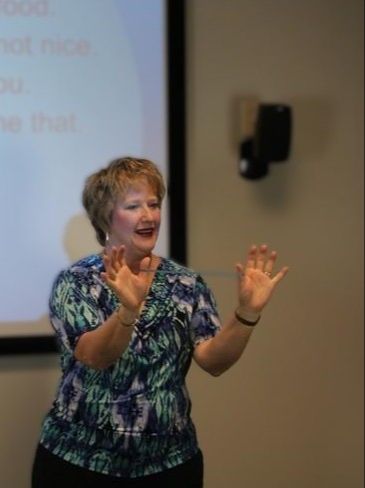
Why Work With a Speech Pathologist?
Not every accent program begins with the same question.
Many start with a standard list of sounds to correct. I begin by listening: identifying the pronunciation, rhythm, pacing, or vocal patterns creating the most listener effort for you.
Two people who speak the same first language may have very different speech patterns. Speech-language pathology training makes it possible to identify which changes will make the greatest practical difference, rather than spending time on changes that do not.
With more than 30 years of clinical and coaching experience, I build a focused plan around the patterns that matter most, while preserving the voice and identity that are already yours.